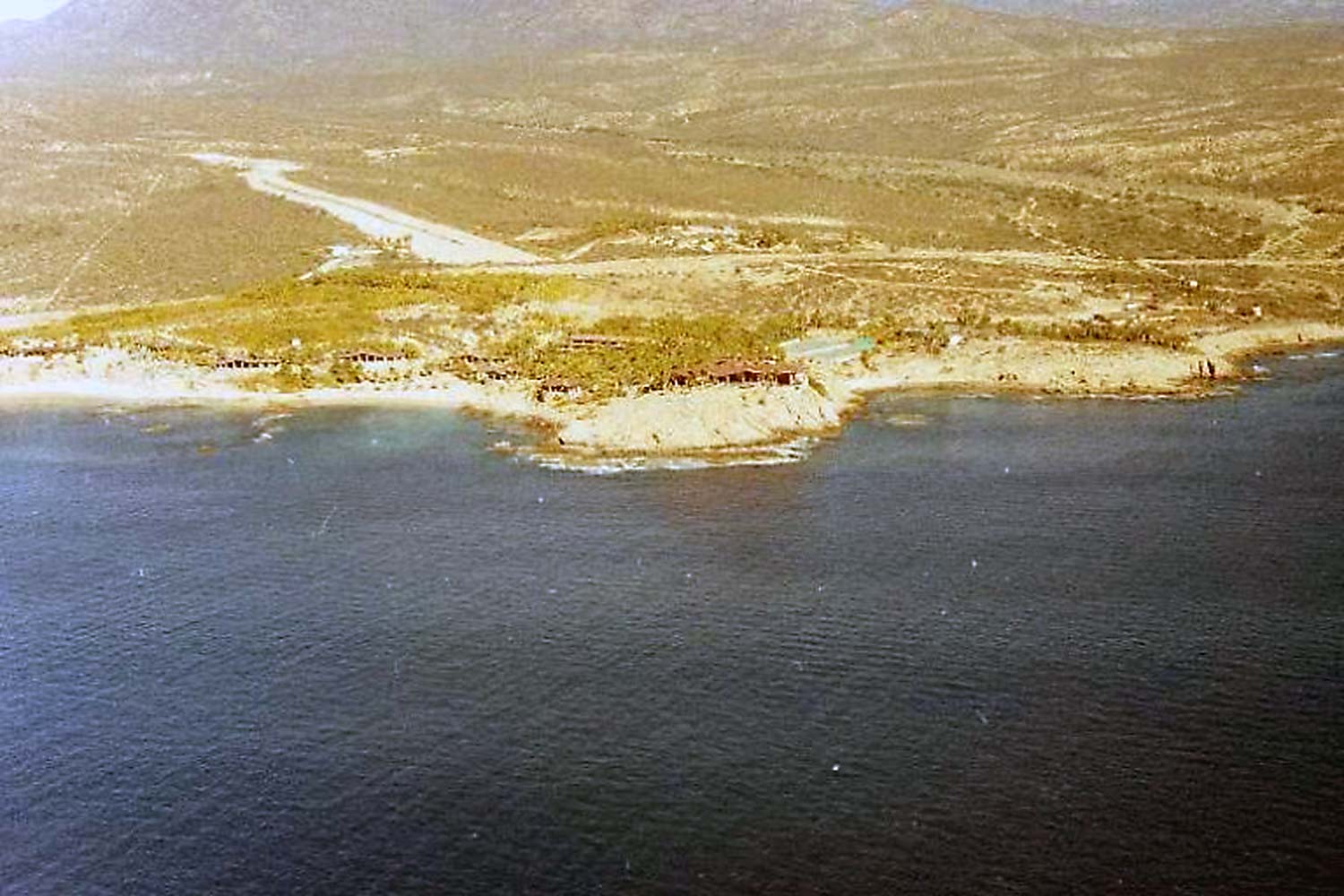
CaboVillas.com talked to Keith Peterman who spent many years flying to Baja California Sur.
Here is an excerpt of his interview with CaboVillas where he shares some memories and historic photos of these trips dating back to the 1970’s and 1980’s. Most resorts were located on the Sea of Cortez coast and at the tip of the peninsula. Therefore, most of their clientele arrived by boat and private aircraft.
Original post published onJune 14, 2016on the website of CaboVillas.com
Historic photo of Hotel Solmar in Cabo San Lucas , Mexico – 1988 PetermanHotel Palmilla San Jose del Cabo airstrip 1988. Photo Petermanhotel-cabo-san-lucas-2905 ft air-strip-1988 Photo Peterman
Local website cabosanlucas.net reports that in 1950 the local population was 548 inhabitants. In 1950 the local population was 548 inhabitants, mostly fishermen and the Compañía de Productos Marinos S.A. tuna cannery workers, at that same time San José del Cabo had less than 2,000 inhabitants.
Standing in the midst of the thriving IGY Marina, shrouded in darkness as small pangas dart to and fro crossing the wakes of both modest sportfishers and mega yachts heading out for the day’s fishing in the fertile waters surrounding Baja’s tip, it’s difficult to imagine that in 1955 Cabo San Lucas was a “Cannery Town” — population about 100.
Cabo San Lucas Marina and Breathless Resort 2017. Photo Tyson
That was the year Don Luis Bulnes Molleda and his wife Conchita accepted the assignment and transferred to Cabo from Ensenada to assume the operation of the Empresas Panado tuna cannery, the only tuna cannery throughout Latin America.
Born on August 25, 1928 in Llivia, a village on the coast of Spain, Bulnes immigrated to Mexico City on June 5, 1948 for a job as a warehouse helper working with Myrurgia Perfumes and Colognes, a subsidiary of Pando. Although he found the metropolitan city exciting, it was also overwhelming.
His future wife, Conchita, the third of four children of Maria Ausencia Hernández and Francisco Malo Sautto, was born in San Miguel de Allende, Guanajuato, and attended the primary and secondary schools in San Luis Potosí, where her love of music blossomed. Lacking a piano, she improvised, using tableware to create an imaginary keyboard. Realizing her passion for music, her parents surprised her with her first piano. Later, Conchita enrolled in the National Conservatory of Music in Mexico City where she wrote the music and lyrics of the first of many compositions.