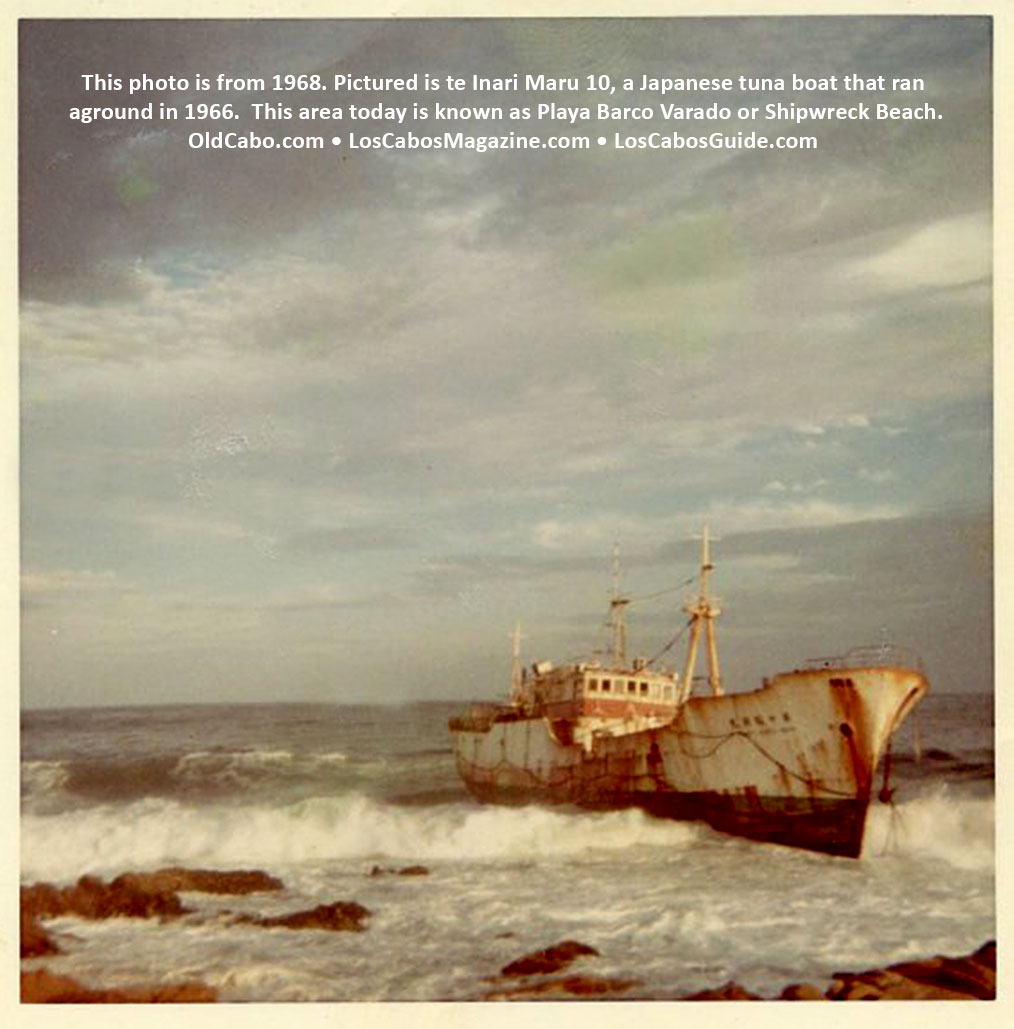
Playa Barco Varado (stranded or aground frigate or boat) or Shipwreck Beach is named after the wreck of the Inari Maru 10, a Japanese tuna boat that ran aground in 1966. Prior to approximately 2005 this old wreck was removed when he Golf Course and Sheraton Hacienda Del Mar Hotel was completed.
The Inari Maru 10, was a Japanese tuna boat ran aground in 1966 at Cabo San Lucas. The photo is from 1968. This area today is known as Playa Barco Varado or Shipwreck Beach.
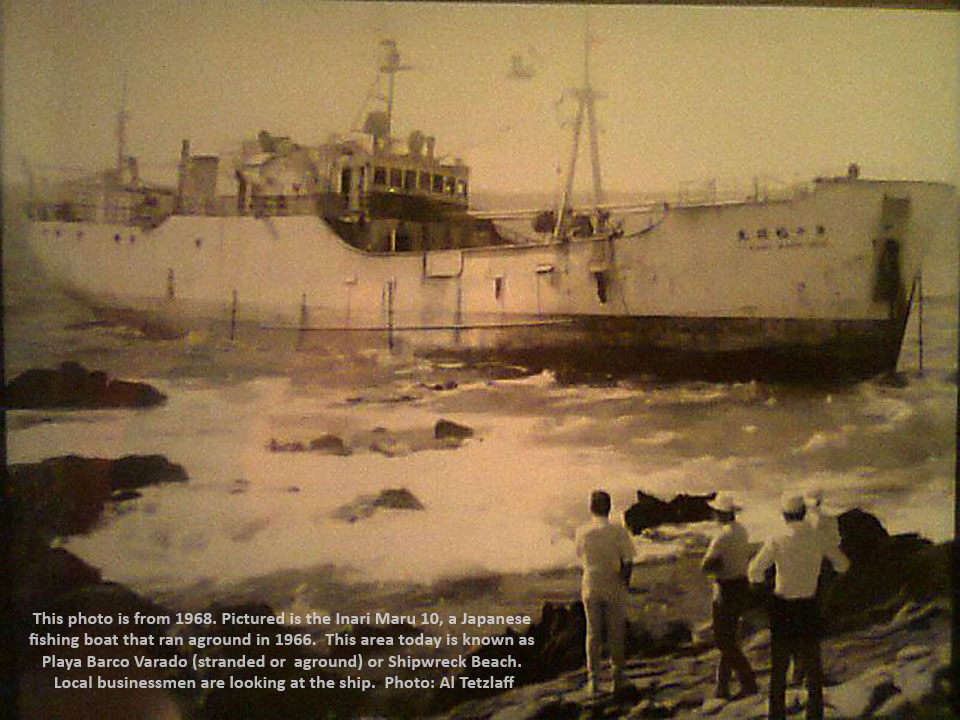
Two local businessmen and two others looking at the grounded ship at Playa Barco Varado. Photo by Al Tetzlaff
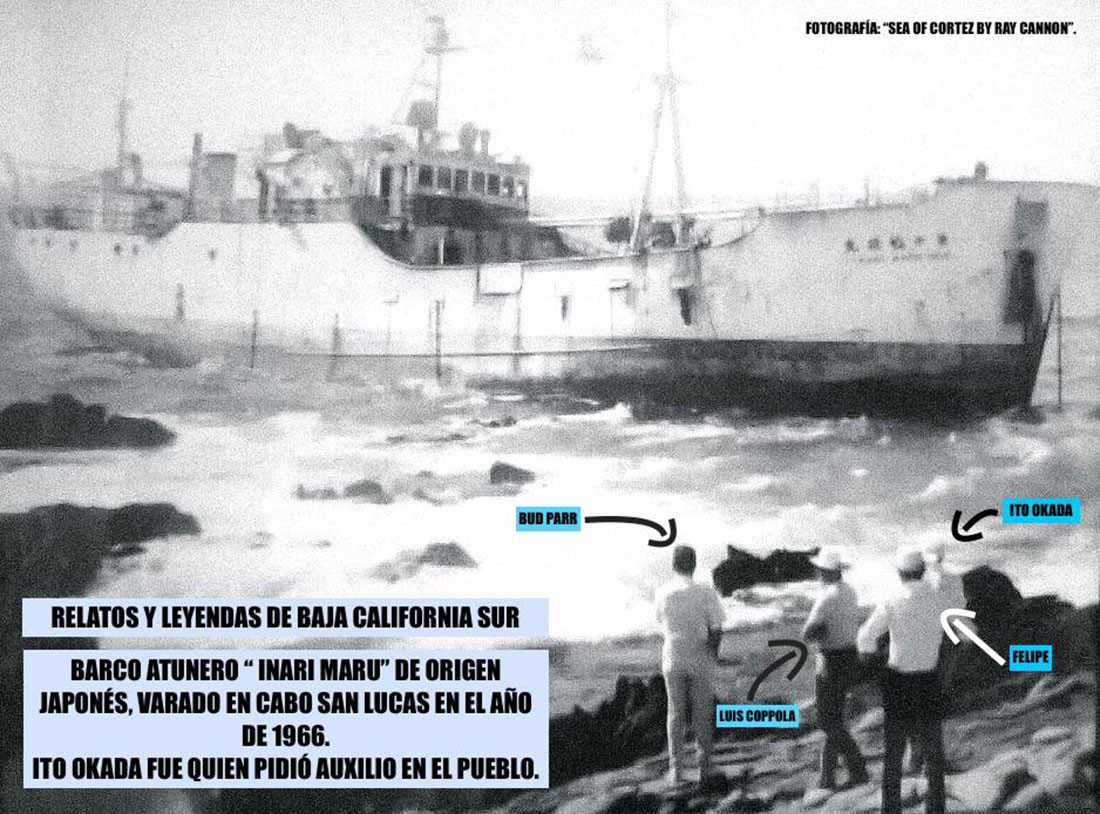
Photo credited to Sea of Cortez by Ray Cannon. People in the photo are identified as: Bud Parr, Luis Coppola, Felipe and Ito Okada. Photo marked as 1966. Photo by Al Tetzlaff
Old shipwreck on Playa Barco Varado on the Corridor in Cabo San Lucas. Photo taken November 1989 by Joseph A. Tyson
Old shipwreck on Playa Barco Varado on the Corridor in Cabo San Lucas. Photo taken November 1989 by Joseph A. Tyson. Today the remains of this shipwreck have been removed.
Photograph of Shipwreck Beach (Playa Barco Varado) were taken during November 1989 by Joseph A. Tyson
Photograph of Shipwreck Beach (Playa Barco Varado) were taken during November 1989 by Joseph A. Tyson
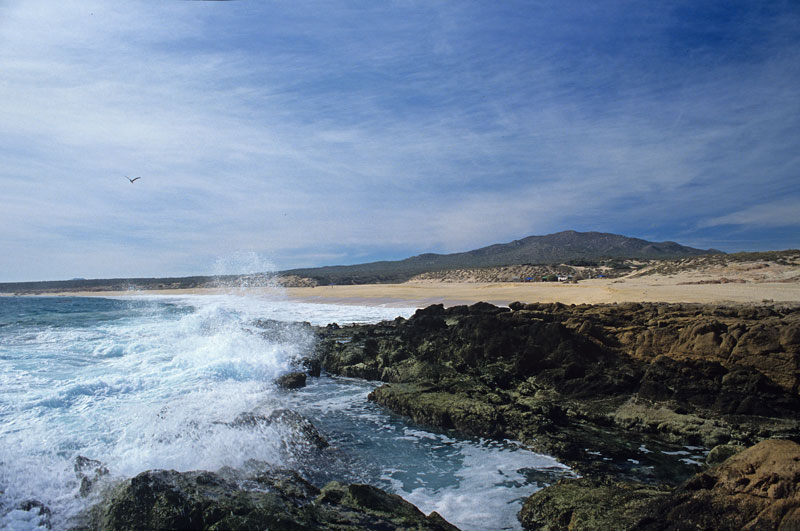
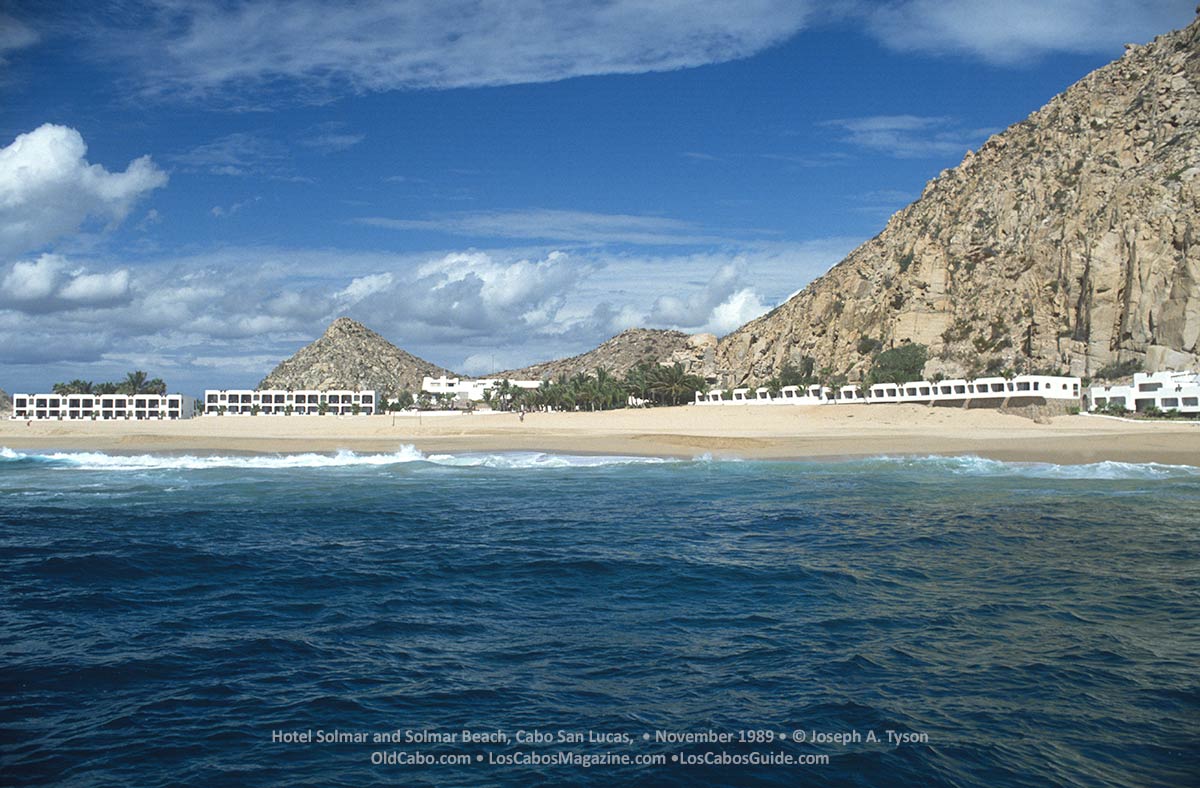
Today none of the wreck remains. This photo was taken September 2005. Families will enjoy exploring the tidal pools, and swimming is possible, too, but not recommended for small children. Access: A long drive in from the highway, enter the beach on the southwest side of the Sheraton Hacienda del Mar Resort and Spa in Cabo del Sol at Kilometer 10.
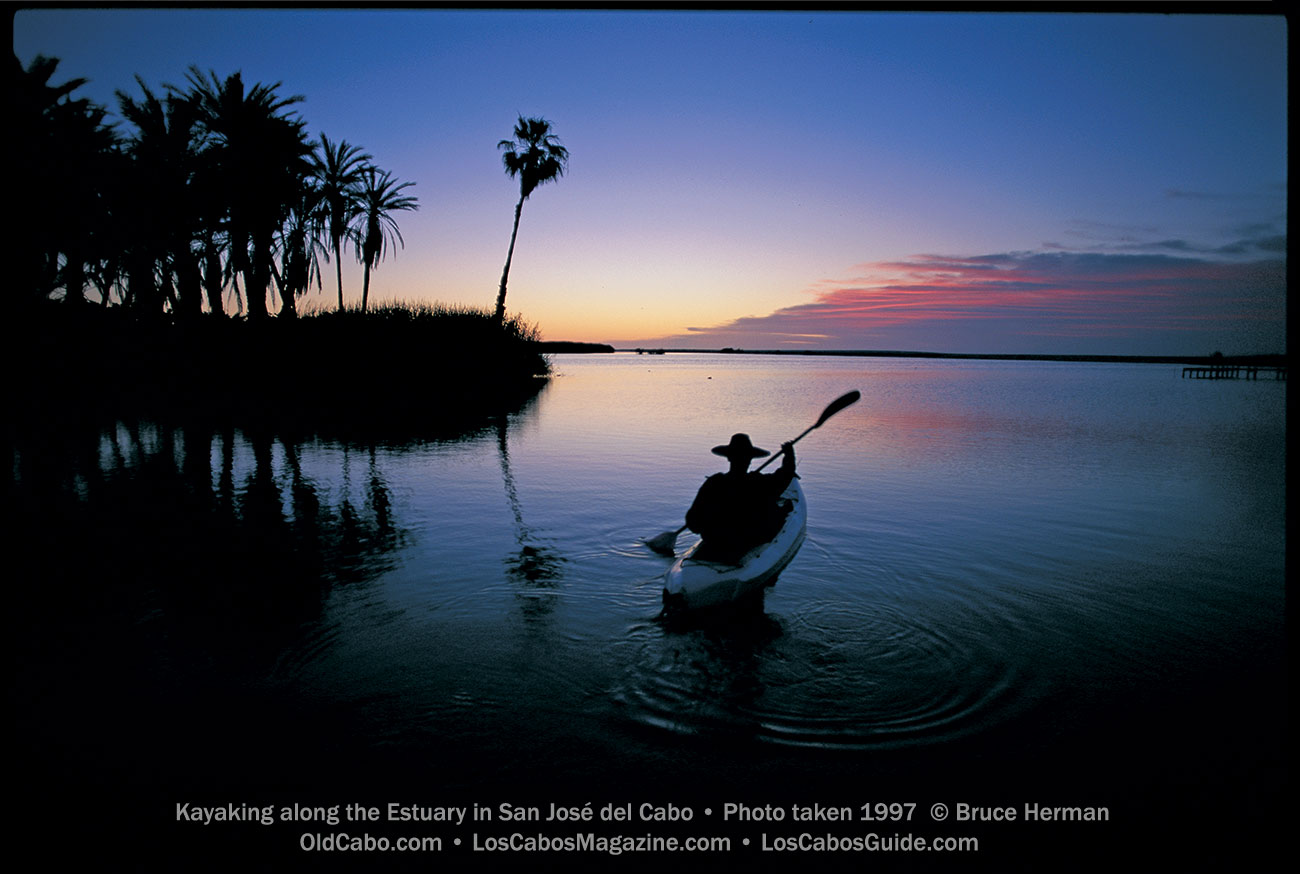
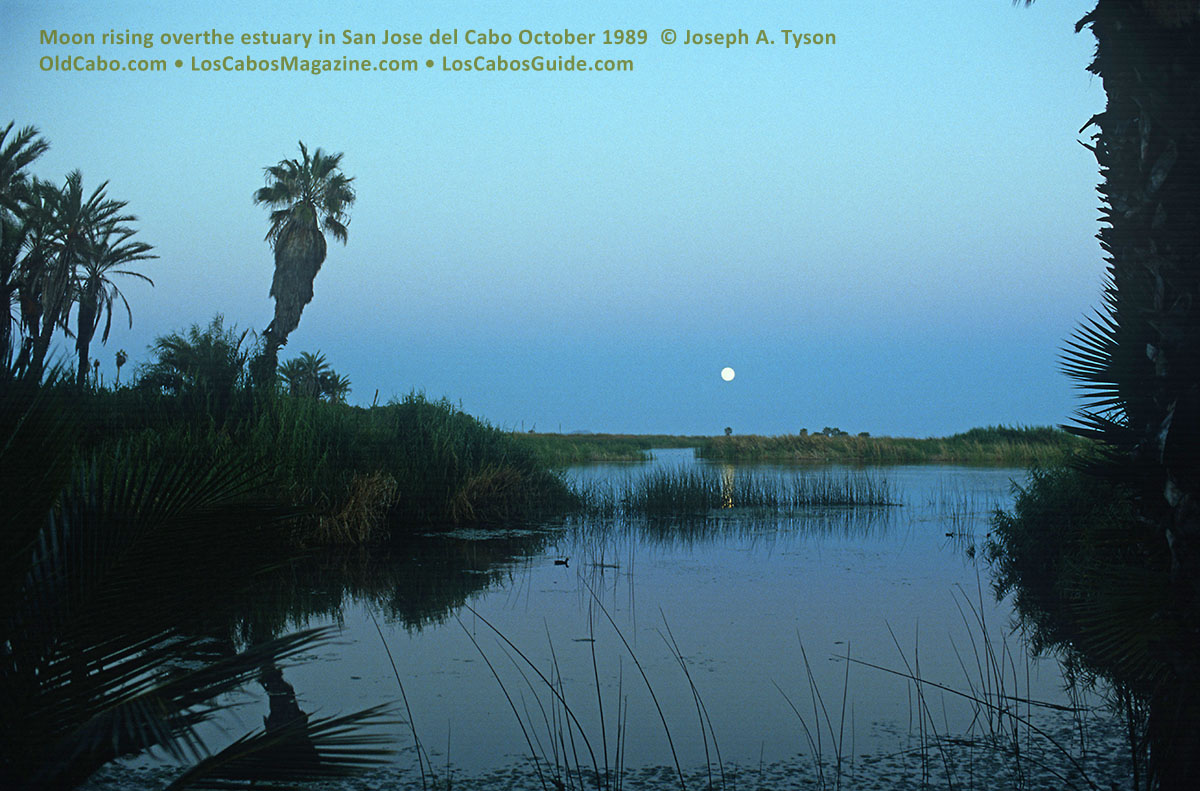
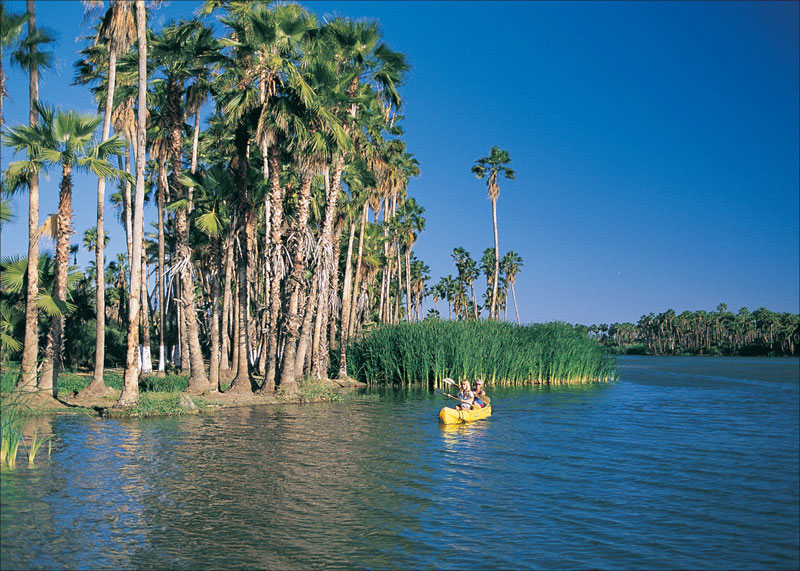
Estero de San José del Cabo
The estuary was called Aguada Segura, or certain watering place, by the Spanish sailors and was the only fresh water source in the southern part of the Baja California Peninsula.
San José del Cabo Estuary, Estero de San José del Cabo, Photo circa 2008, by Francisco Estrada – PhotoMexico.com
A Land Before Time
Our guide may be short, but San José del Cabo—known as simply San José among locals—has a long, rich history. Forty thousand years ago, the San José region was known as Añuiti (“place full of reeds”) and populated by the Pericue Indians, who were very tall and strong and in possession of advanced maritime technology. The Pericues lived on the land, feasted from the oceans, and left later generations tales of their lives through mysterious paintings on cave walls. Through the years, the land now known as San José del Cabo was fought over and lost, rebuilt and destroyed, cherished or sold by many peoples: the English, the Spanish, the Pericues, and even pirates.
Spanish galleons made their way to San José del Cabo in the 17th and 18th centuries. They would stop, it’s said, to replenish their water supplies in the Río San José during their long voyages to Asia. The town’s mission was founded in 1730.
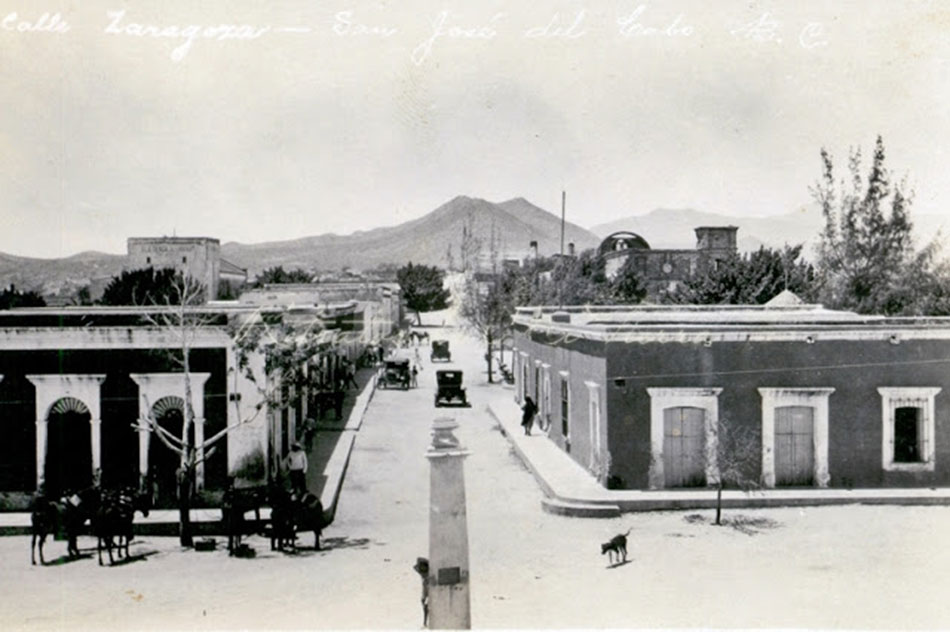
San Jose del Cabo, c. 1910
https://raulverdugo.blogspot.mx/2012/06/san-jose-del-cabo-anuiti.html
La Misión Jesuita, se estableció por primera vez , cerca de la costa, donde los Josefinos, conocemos el lugar como Las misiones, a un lado del cementerio actual de San Jose del Cabo, pero pronto se trasladó ocho kilómetros hacia el interior, hoy San José Viejo.