Estero de San José del Cabo
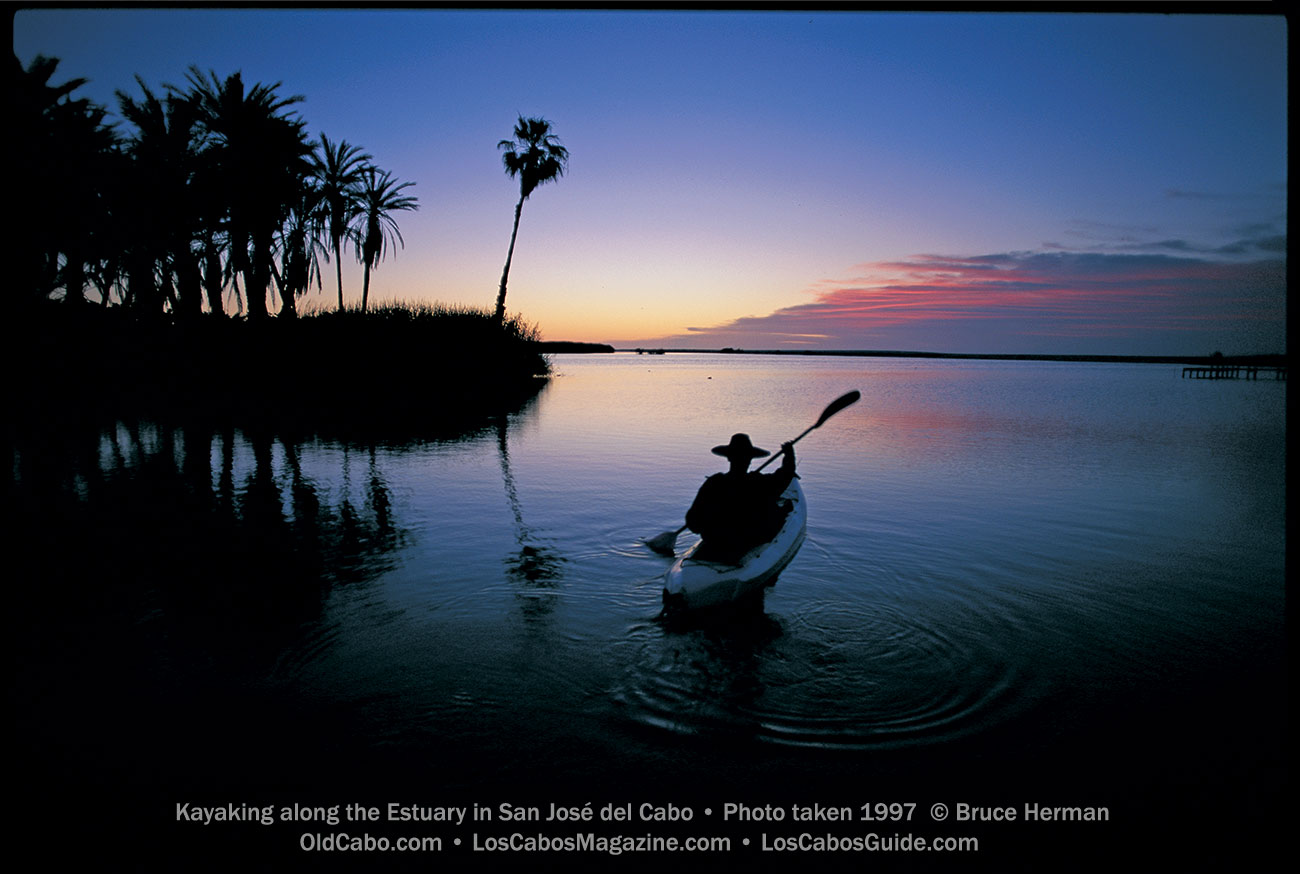
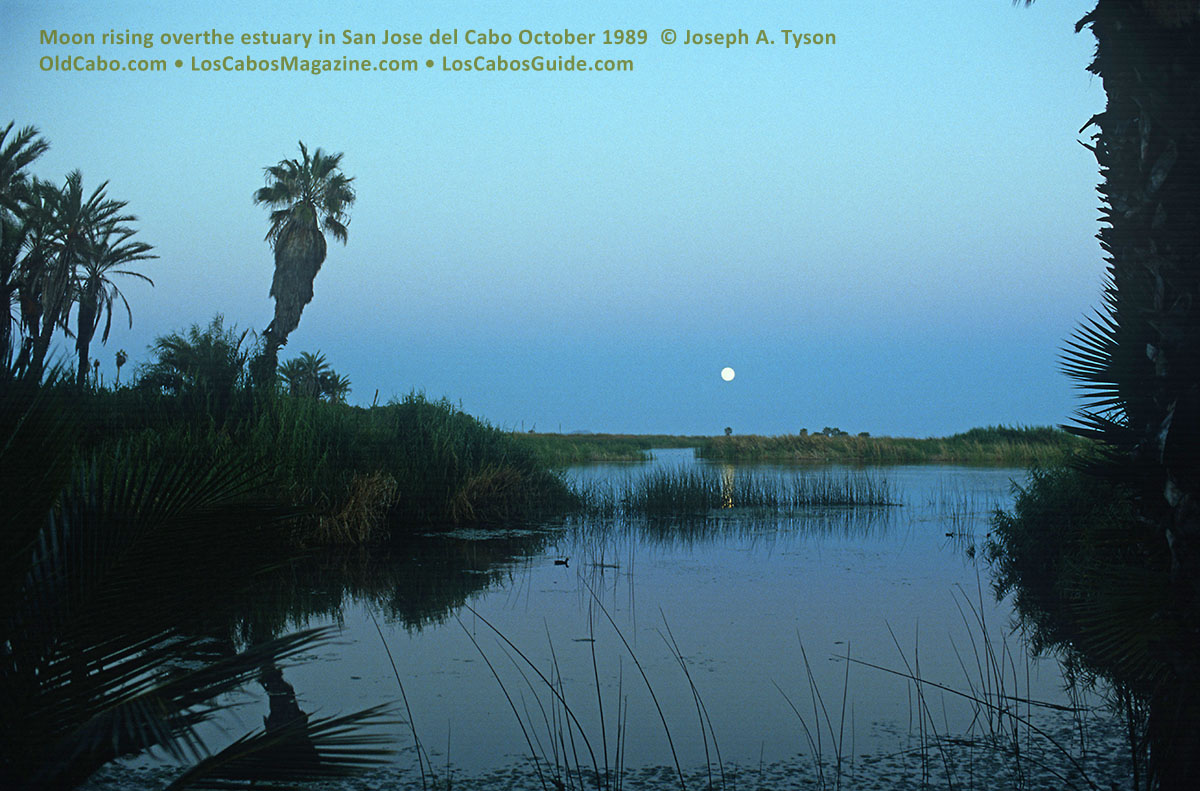
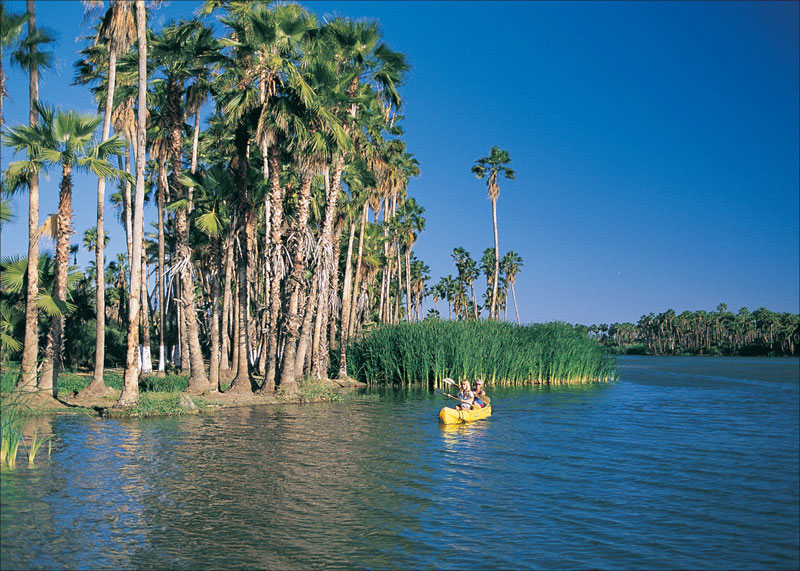
The estuary was called Aguada Segura, or certain watering place, by the Spanish sailors and was the only fresh water source in the southern part of the Baja California Peninsula.



Historic Images and Photographs of Cabo San Lucas, The Tourist Corridor & San Jose del Cabo, Los Cabos, Baja California Sur.
Estero de San José del Cabo
The estuary was called Aguada Segura, or certain watering place, by the Spanish sailors and was the only fresh water source in the southern part of the Baja California Peninsula.
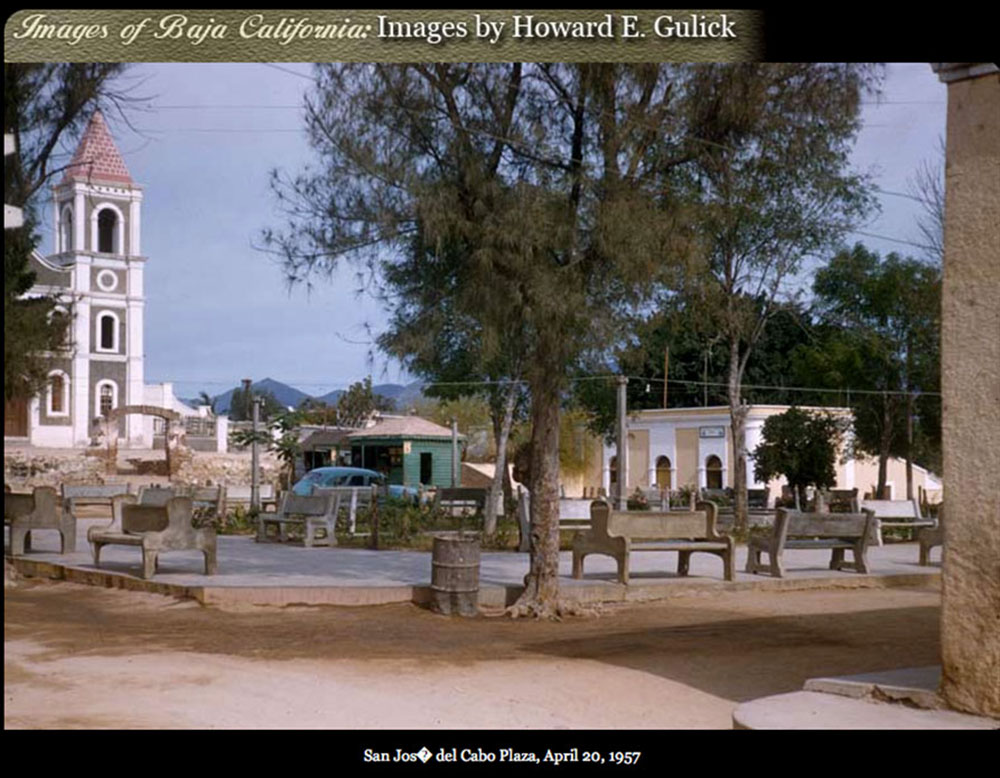
A Land Before Time
Our guide may be short, but San José del Cabo—known as simply San José among locals—has a long, rich history. Forty thousand years ago, the San José region was known as Añuiti (“place full of reeds”) and populated by the Pericue Indians, who were very tall and strong and in possession of advanced maritime technology. The Pericues lived on the land, feasted from the oceans, and left later generations tales of their lives through mysterious paintings on cave walls. Through the years, the land now known as San José del Cabo was fought over and lost, rebuilt and destroyed, cherished or sold by many peoples: the English, the Spanish, the Pericues, and even pirates.
Spanish galleons made their way to San José del Cabo in the 17th and 18th centuries. They would stop, it’s said, to replenish their water supplies in the Río San José during their long voyages to Asia. The town’s mission was founded in 1730.
Now San José is the municipal seat for Los Cabos and home to amazing restaurants, magnificent hotels, quaint shops, beautiful architecture, warm people, and safe streets.
Excerpt from Los Cabos Magazine. https://www.loscabosmagazine.com/2013/09/my-favorite-weekend-san-jose-del-cabo/

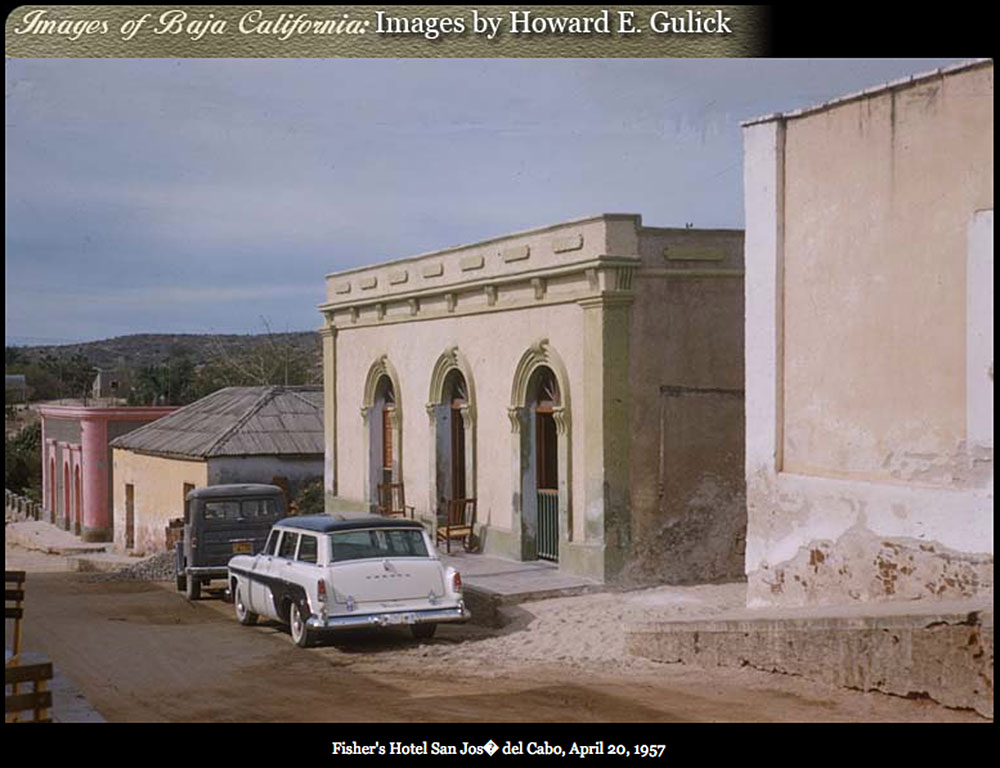


Source: https://www.loscabosmagazine.com/2013/09/my-favorite-weekend-san-jose-del-cabo/
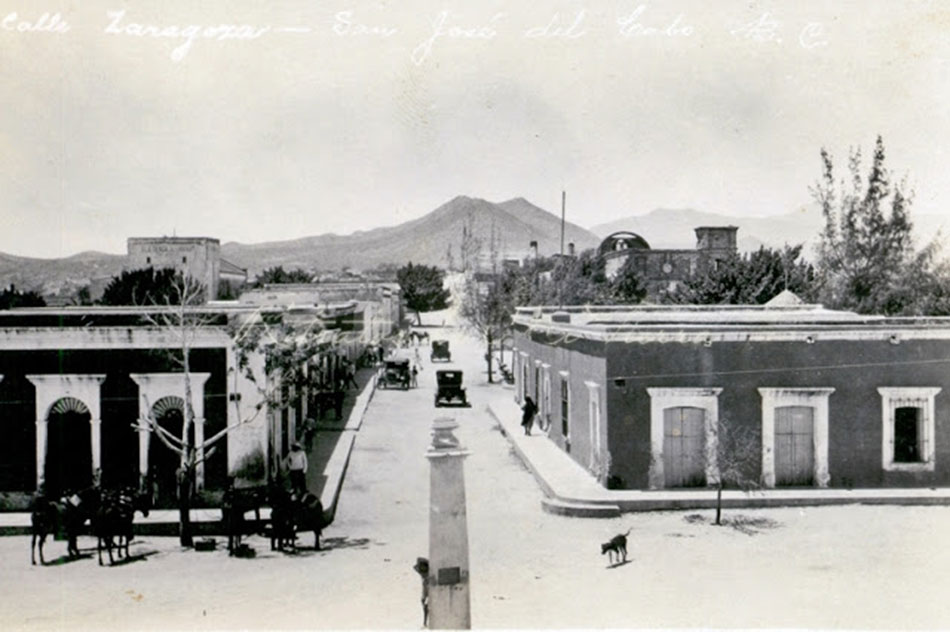
San Jose del Cabo, c. 1910
https://raulverdugo.blogspot.mx/2012/06/san-jose-del-cabo-anuiti.html
La Misión Jesuita, se estableció por primera vez , cerca de la costa, donde los Josefinos, conocemos el lugar como Las misiones, a un lado del cementerio actual de San Jose del Cabo, pero pronto se trasladó ocho kilómetros hacia el interior, hoy San José Viejo.

Source: https://www.pinterest.com/pin/229965124694002313/
Source: https://www.mexican-folk-art-guide.com/san-jose-del-cabo-historic-places.html#.VXjmEaZ4gn9

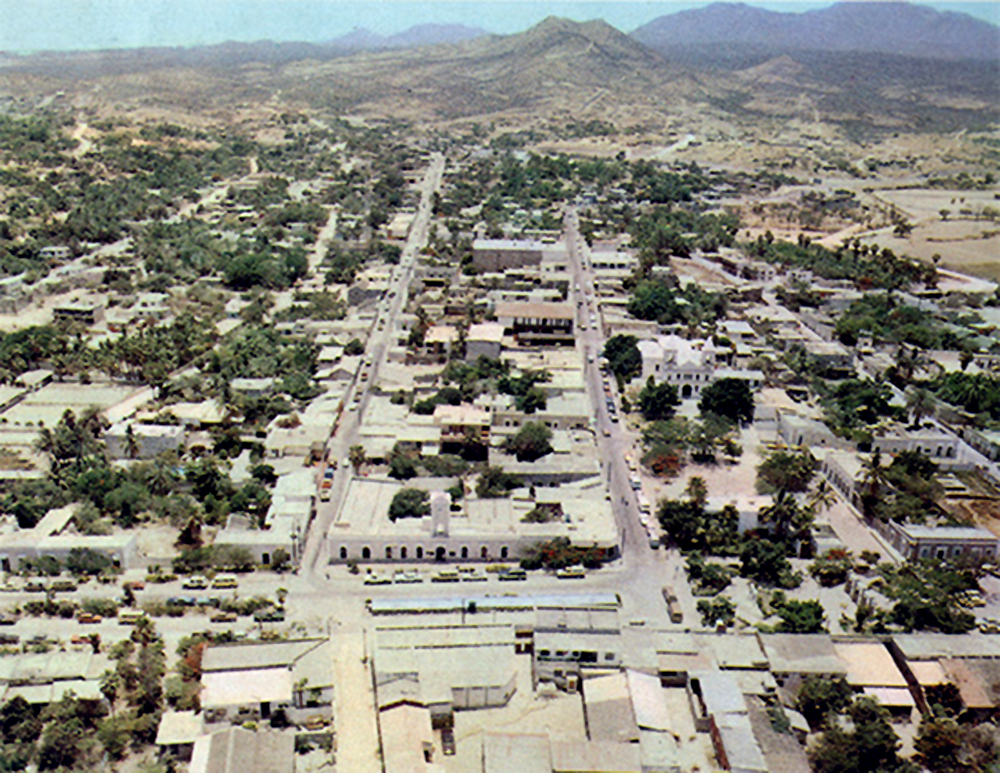
This is an excellent view of San Jose del Cabo in 1976 as photographed by Harry W. Crosby.
San José del Cabo 1976 © Harry W. Crosby
Collection: Harry Crosby Photographs
Special Collections & Archives, University of California,
San Diego, La Jolla

The original San José del Cabo Añuiti Mission Church was built in April 8, 1730.


Founded near the southern end of the California peninsula, this was one mission that served one of the reasons for occupying California (to resupply the Manila Galleon on its long return to Acapulco from Asia).
The Pericú Revolt of 1734 destroyed the mission, and over its years, the mission moved locations at least 4 times between the beach and 5 miles inland.
The mission was closed in 1748, and for the next 20 years it was a visita (satellite mission station) of Santiago. It was returned to mission status with the arrival of the Franciscans who replaced the Jesuits after their forced removal.
No ruins remain today at any of the 4 sites, but the modern church in the town plaza is built on the final site.
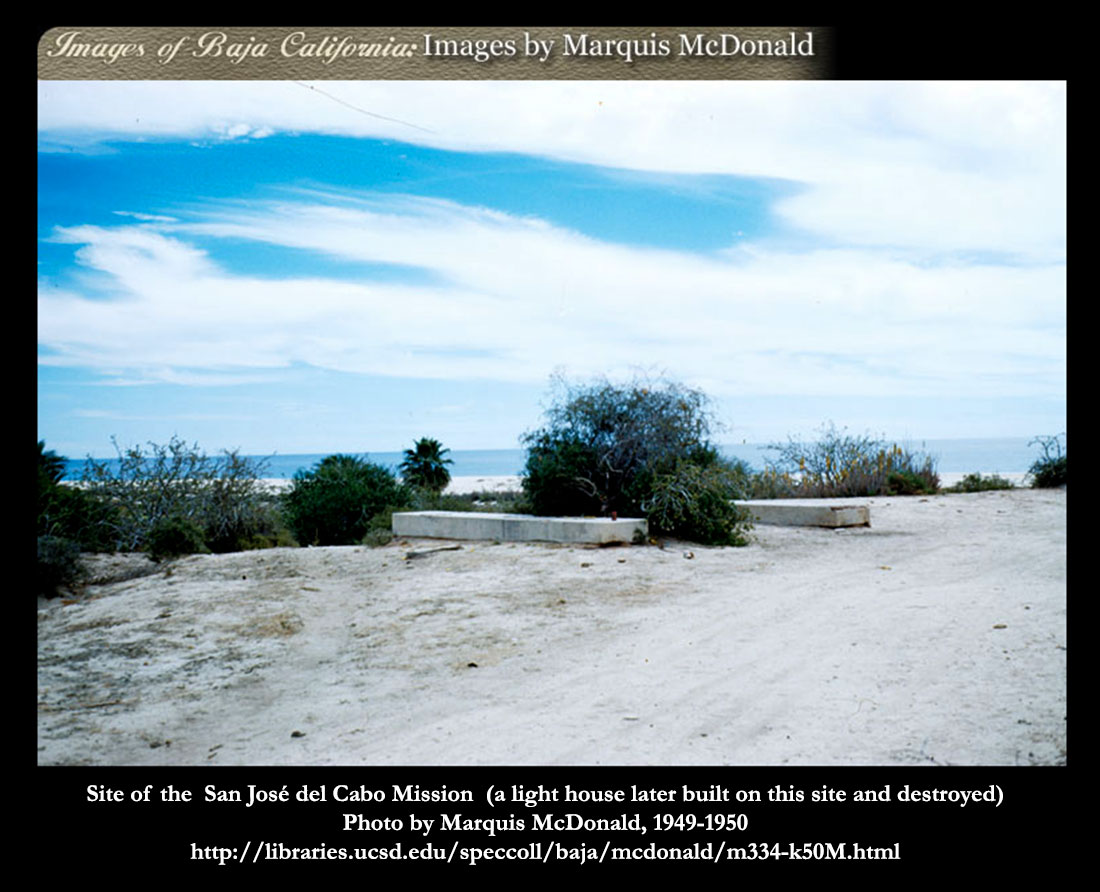
Marquis Mcdonald identified two of the old mission sites during his excursion during 1949-1950, but there was very little remaining to determine the size or shape. His book, Baja: Land of Lost Missions reports his findings.
Tile mosaic above the entrance doorway shows the murder of Father Tamaral in 1734.
Source: https://historum.com/american-history/83478-missionaries-baja-california-1697-1850-a-2.html


Established in 1730 by Jesuits Father Nicolas Tamaral and Jose Echeverria, the first Mission building was established close to the Estero (Rio San Jose), soon they have to move locations do to a
mosquito infestation the new location was San Jose Viejo.
Constructions at that time were simple adobe structures
with stick and palm roofs and do to storm damage and Pericu Indians sacked and destroying the buildings the Missionaries had to move the mission location on several times. Father Tamaral rebuilt the Mission on the Santa Rosa area.
In 1734 Father Tamaral pronounced against polygamy, this pronouncement caused a rebellion, where the Pericu Indians burned the Mission and during the uprising, Father Nicolas Tamaral was murdered with great cruelty, The Jesuit Fathers left the Baja Peninsula in 1768.
In 1793 the Mission was destroyed by a storm and rebuilt in 1799.
From 1820’s to 1840’s due to wars and the poor conditions of the building the Mission was abandoned in 1840.
In 1932 the actual Mission was built across to the Plaza Mijares, being served by Combodian Missionaries from 1948 – 1986. Actually the Mission of San Jose has been in the Hands of Diocesan Clergy and attended by Father Juvencio Gonzalez.
English Mass: Sunday at 12 Noon
Phone: (624) 142-0064
Email: padrejuve@hotmail.com
From an old website: https://www.cabomission.com/


San José del Cabo Catholic Chruch • Misión de San José del Cabo Anuiti.
Photo June 22, 2015 • Joseph A. Tyson


Mission San José del Cabo was the southernmost of the Jesuit missions on the Baja California peninsula, located near the modern city of San José del Cabo in Baja California Sur, Mexico.The southern cape of the Baja California peninsula had been an often-visited landmark for Spanish navigators (as well as English privateers) for nearly two centuries when a mission was finally established at the Pericú settlement of Añuití in 1730 by Nicolá Tamaral. Initially located near the beach, the station was subsequently moved inland about 8 kilometers.In 1734 the Pericú Revolt broke out, Tamaral was killed, and the mission was destroyed. In 1735–1736, the reestablished outpost was moved back closer to the coast, but it served as a visita for Mission Santiago and as the site of a Spanish presidio. In 1753, San José del Cabo was again moved inland. In 1795, under the Dominicans, the surviving native population of Mission Santiago was transferred to San José del Cabo. The mission was finally closed in 1840.
Today this is the most historical place to get married in Los Cabos with a Catholic ceremony. Have a nice day, Francisco Estrada
https://photoamore.photoshelter.com/
—————