Playa Barco Varado or Shipwreck Beach Cabo

old-shipwreck-beach-cabo-nov-1989

Playa Barco Varado (stranded or aground frigate or boat) or Shipwreck Beach is named after the wreck of the Inari Maru 10, a Japanese tuna boat that ran aground in 1966. Prior to approximately 2005 this old wreck was removed when he Golf Course and Sheraton Hacienda Del Mar Hotel was completed.
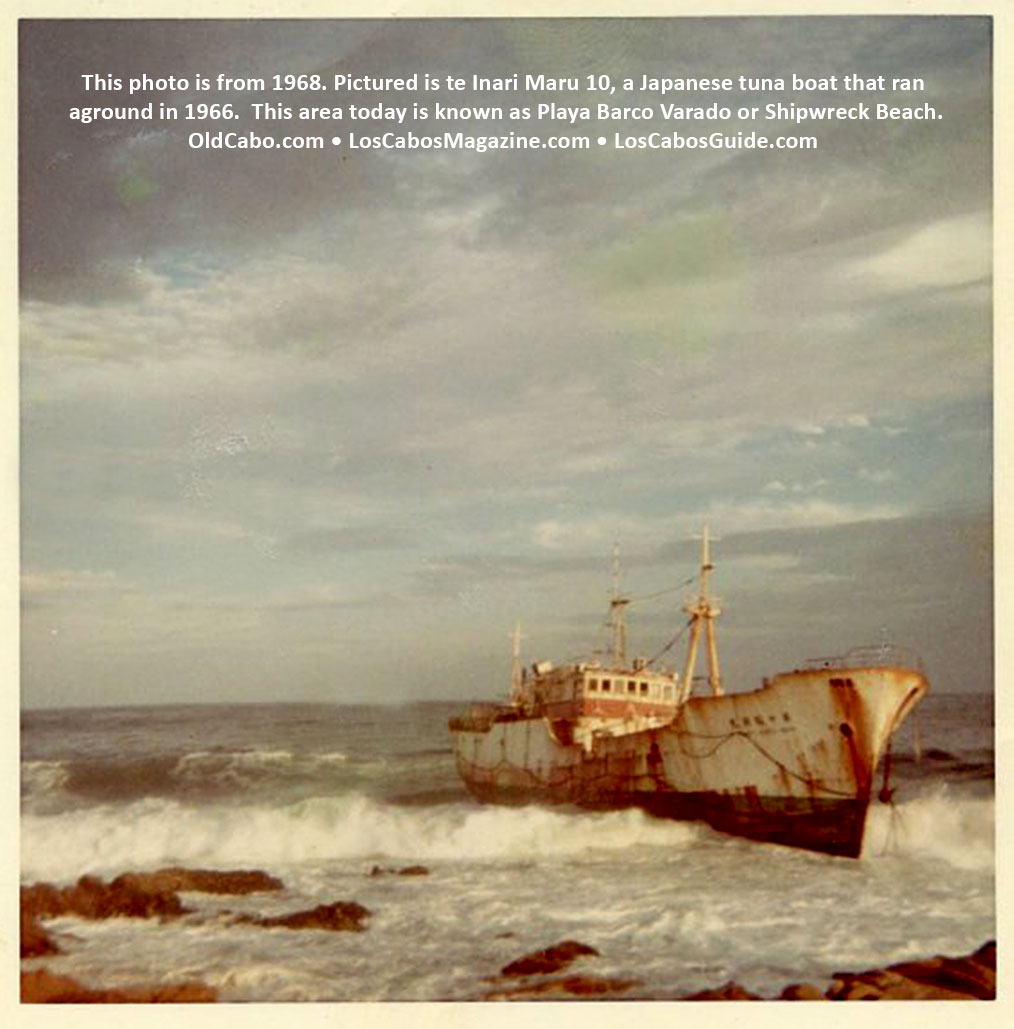
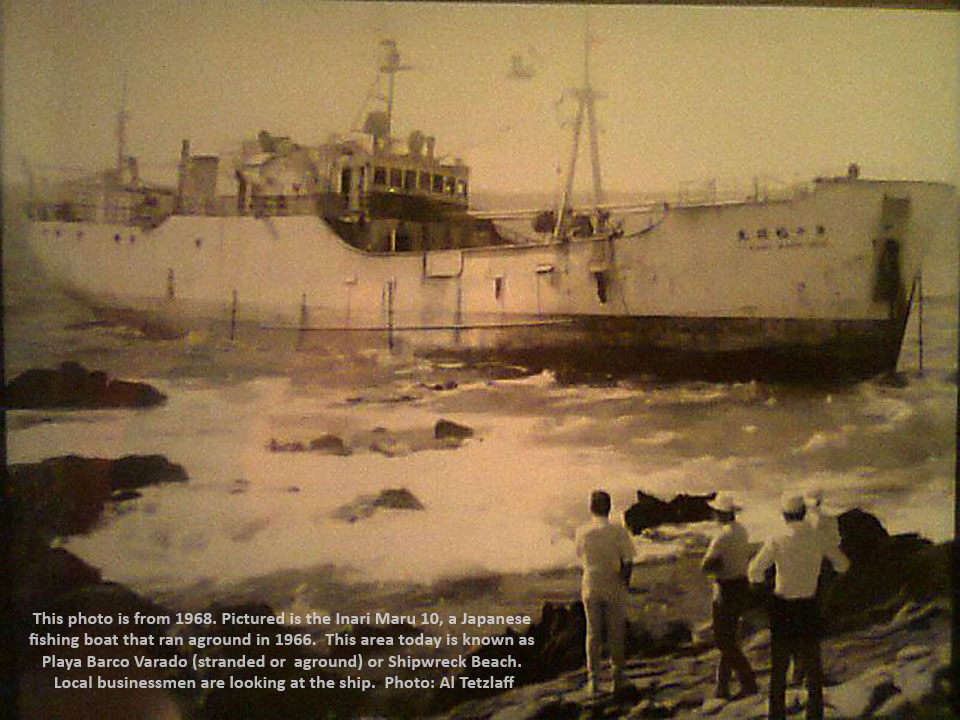
The Inari Maru 10, was a Japanese tuna boat ran aground in 1966 at Cabo San Lucas. The photo is from 1968. This area today is known as Playa Barco Varado or Shipwreck Beach.


Two local businessmen and tow others looking at the grounded ship at Playa Barco Varado. Photo by Al Tetzlaff

Two local businessmen and two others looking at the grounded ship at Playa Barco Varado. Photo by Al Tetzlaff
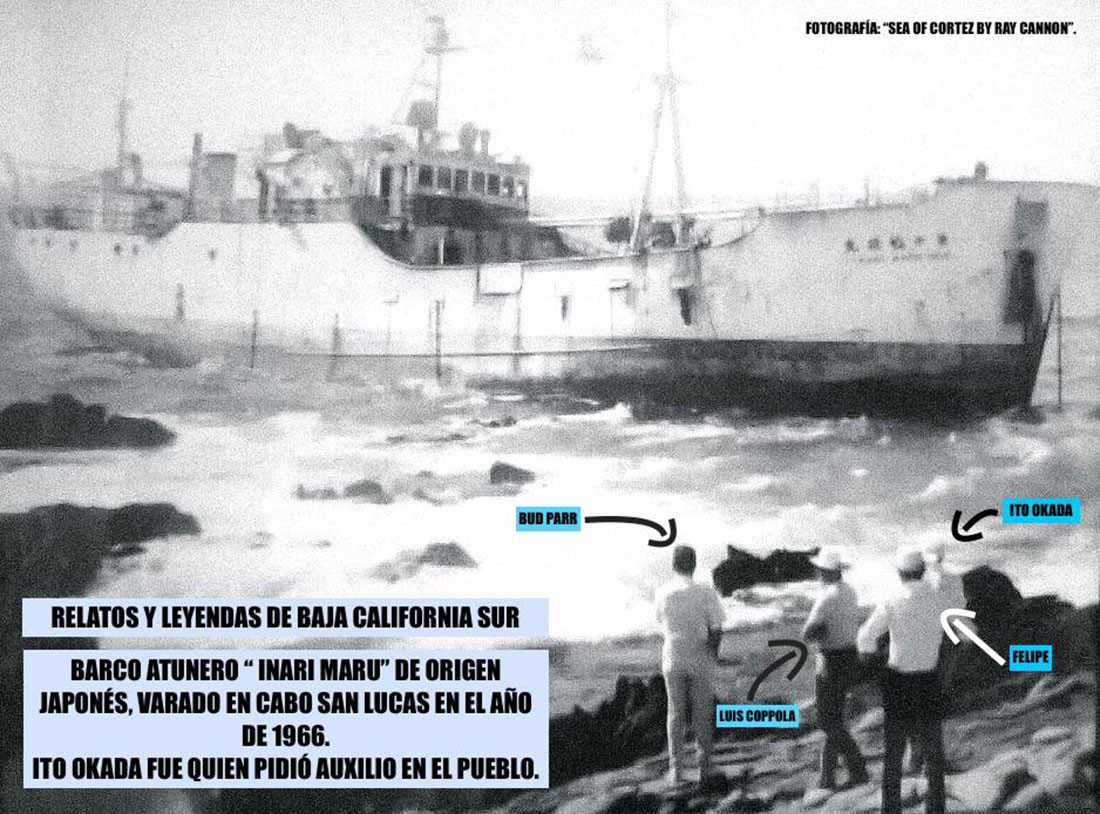
 

tuna-boat-grounded-cabo-locals-1966-2

Photo credited to Sea of Cortez by Ray Cannon. People in the photo are identified as: Bud Parr, Luis Coppola, Felipe and Ito Okada. Photo marked as 1966. Photo by Al Tetzlaff


Old shipwreck on Playa Barco Varado on the Corridor in Cabo San Lucas. Photo taken November 1989 by Joseph A. Tyson


old-shipwreck-beach-cabo-nov-1989
Old shipwreck on Playa Barco Varado on the Corridor in Cabo San Lucas. Photo taken November 1989 by Joseph A. Tyson. Today the remains of this shipwreck have been removed.


Photograph of Shipwreck Beach (Playa Barco Varado) were taken during November 1989 by Joseph A. Tyson
Photograph of Shipwreck Beach (Playa Barco Varado) were taken during November 1989 by Joseph A. Tyson


Photograph of Shipwreck Beach (Playa Barco Varado) were taken during November 1989 by Joseph A. Tyson

Photograph of Shipwreck Beach (Playa Barco Varado) were taken during November 1989 by Joseph A. Tyson


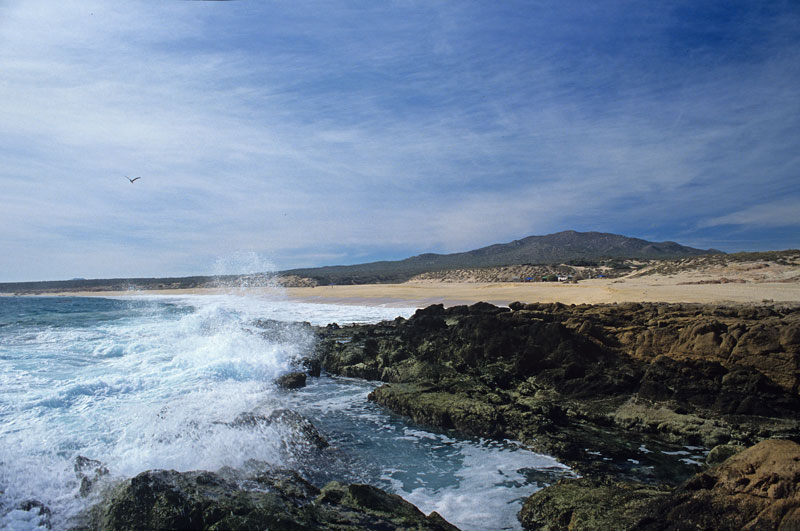
None of the wreck remains. Families will enjoy exploring the tidal pools, and swimming is possible, too, but not recommended for small children. Access: A long drive in from the highway, enter the beach on the southwest side of the Sheraton Hacienda del Mar Resort and Spa in Cabo del Sol at Kilometer 10.
Today none of the wreck remains. This photo was taken September 2005. Families will enjoy exploring the tidal pools, and swimming is possible, too, but not recommended for small children. Access: A long drive in from the highway, enter the beach on the southwest side of the Sheraton Hacienda del Mar Resort and Spa in Cabo del Sol at Kilometer 10.

More information at this link.
https://www.cabosanlucasbeaches.com/shipwreck-beach/

Hotel Cabo San Lucas

Update September 2012: Construction is once again underway on this project. Aerial view of Chileno Beach and Bay, Cabo San Lucas Tourist Corridor.
Update September 2012: Construction is once again underway on this project. Aerial view of Chileno Beach and Bay, Cabo San Lucas Tourist Corridor. Photo Joseph A. Tyson


Aerial view of Hotel Cabo San Lucas, March 1993.  Photo by Joseph A. Tyson
Aerial view of Hotel Cabo San Lucas, March 1993.
Photo by Joseph A. Tyson


Post card of Chileno Beach showing part of Hotel Cabo San Lucas. Photo Joseph A. Tyson

Cabo San Lucas Bay Then and Now

Cabo San Lucas Bay and shoreline in 1951 and  similar view of the bay and shoreline in 2009 with five cruise ships in the bay.

Cabo San Lucas Bay and shoreline in 1951. Photo Gulick
Cabo San Lucas Bay and shoreline in 1951. Photo by Howard E. Gulick


The first time five cruise ships were in Cabo San Lucas Bay at the same time. September 28, 2009. Photo by Joseph A. Tyson

Captain Thomas Ritchie

Legendary Captain Thomas Ritchie  1809 – 1872

Cabo San Lucas. Dibujo de John Ross Browne. Año 1867 or 1868
Drawing of the Cabo San Lucas arch and rock formations . Dibujo de John Ross Browne. Año 1867 or 1868

Captain Ritchie was a singular man and outside the common way of life.  He had an adventurous spirit which distinguished the first pioneers of this coast, and owned a generous heart always ready to give of its abundance when needed.  He had that peculiar faculty which sees justice from an abstract point of view, and was guided by the internal principles of his conscience rather than the dictates of convention or the urgency of the laws of society.  When a boy of only seventeen years, he fled an English whaling ship and settled in Cabo San Lucas for more than 50 years.  He had two Mexican spouses (though some say seven).  He founded a great family and by the last years of his life was an absolute judge in the district whose word was considered law. https://www.thomasritchieincabo.com/contenido/biography.html

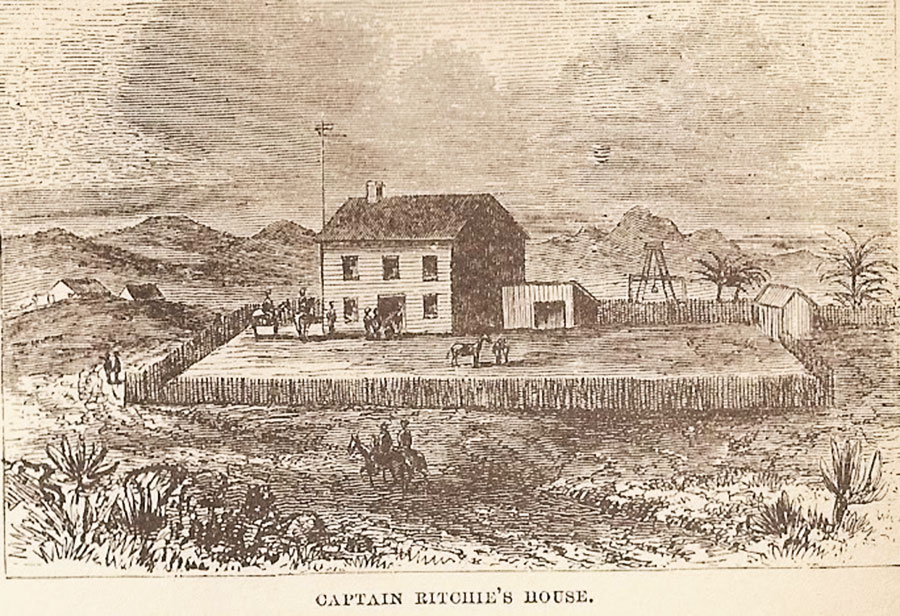
drawing-house-captain-richie-cabo
Drawing of Captain Ritchie´s house in Cabo San Lucas.

Captain Ritchie´s house in Cabo San Lucas is a hearth to adventurers of all parts of the world.  Admirals, commodores, captains, common sailors and pirates all took refuge there.  Miners, merchants and cattleman all made use of the house.  In a word, the door was open to all.  All that have money can pay; to those who do not he gives food and drink for their companionship from his generous heart.  No traveler went away from his door without rest and support.  Since the opening of the mines San Antonio and Triumph, Captain Ritchie has done a good business bringing passengers and cargo to the mines.  Whalers find it advisable to arrive at the house with fresh beef so that there is always enough meat for all.
Source: “Mazatlán Decimonónico” by Antonio Lerma Garay.